


Do LED Luminaire Street Lights Emit UV Rays?
As a supplier of LED luminaire street lights, I often encounter questions from customers regarding the safety and potential hazards of our products. One of the most common inquiries is whether LED street lights emit ultraviolet (UV) rays. In this blog post, I will delve into this topic, providing a scientific and comprehensive analysis to address your concerns.
Understanding UV Rays and Their Effects
Before we discuss whether LED street lights emit UV rays, it's essential to understand what UV rays are and their potential impact on human health and the environment. UV rays are a type of electromagnetic radiation with wavelengths shorter than visible light but longer than X - rays. They are classified into three categories: UVA (320 - 400 nm), UVB (280 - 320 nm), and UVC (100 - 280 nm).
UVA rays can penetrate deep into the skin, causing premature aging, wrinkles, and an increased risk of skin cancer. UVB rays are responsible for sunburns and also contribute to skin cancer development. UVC rays are the most dangerous, but they are mostly absorbed by the Earth's ozone layer and do not reach the surface.
Exposure to excessive UV radiation can have detrimental effects on human health, including skin damage, eye problems such as cataracts, and suppression of the immune system. It can also harm the environment, affecting plant growth and aquatic ecosystems.
How LED Street Lights Work
LED (Light - Emitting Diode) street lights are a type of solid - state lighting technology. Unlike traditional incandescent or fluorescent lights, LEDs produce light through a process called electroluminescence. When an electric current passes through a semiconductor material, electrons recombine with holes, releasing energy in the form of light.

The semiconductor materials used in LEDs are carefully selected to emit light in the visible spectrum, typically in the range of 380 - 780 nm. This means that the light produced by LEDs is primarily visible light, which is safe for human eyes and does not contain significant amounts of UV or infrared radiation.
Do LED Street Lights Emit UV Rays?
In general, high - quality LED street lights do not emit significant amounts of UV rays. The manufacturing process of LEDs is designed to produce light within the visible spectrum. The semiconductor materials and the encapsulation techniques used in LED production ensure that the light output is focused on the visible wavelengths.
However, it's important to note that there can be some minor exceptions. In rare cases, if there are manufacturing defects or if low - quality components are used, there may be a small amount of UV emission. But this is extremely uncommon in well - made LED street lights from reputable suppliers.
Several studies have been conducted to measure the UV emission of LED lighting. These studies have consistently shown that the UV levels from LED street lights are far below the safety limits set by international standards. For example, the International Electrotechnical Commission (IEC) has established strict guidelines for the maximum allowable UV emission from lighting products, and most LED street lights easily meet these requirements.
Factors Affecting UV Emission in LED Street Lights
Although the risk of UV emission from LED street lights is low, there are some factors that could potentially increase the UV output:
- Poor Quality Components: Using low - quality semiconductor materials or encapsulation materials can lead to increased UV leakage. Reputable LED street light suppliers, like us, use high - quality components to ensure minimal UV emission.
- Overheating: Excessive heat can cause changes in the properties of the semiconductor material, potentially leading to some UV emission. However, modern LED street lights are designed with efficient heat dissipation systems to prevent overheating.
- Aging and Degradation: Over time, the performance of LED street lights may degrade. In some cases, this degradation could potentially lead to a small increase in UV emission. Regular maintenance and replacement of aging components can help mitigate this risk.
Benefits of LED Street Lights in Terms of UV Safety
LED street lights offer several advantages in terms of UV safety compared to traditional lighting sources:
- Low UV Emission: As mentioned earlier, LED street lights emit very little to no UV rays, making them a safer option for public areas.
- Energy Efficiency: LED street lights consume less energy than traditional lights, which means less heat generation. This reduces the risk of overheating and potential UV emission.
- Long Lifespan: LED street lights have a longer lifespan than traditional lights. This reduces the frequency of replacement, minimizing the chances of using low - quality replacement parts that could potentially emit UV rays.
Our Products and UV Safety
As a supplier of LED luminaire street lights, we take UV safety very seriously. Our Outdoor Led Street Lamps are designed and manufactured to meet the highest quality and safety standards. We use only high - quality semiconductor materials and advanced encapsulation techniques to ensure that our lights emit only visible light and have negligible UV emission.
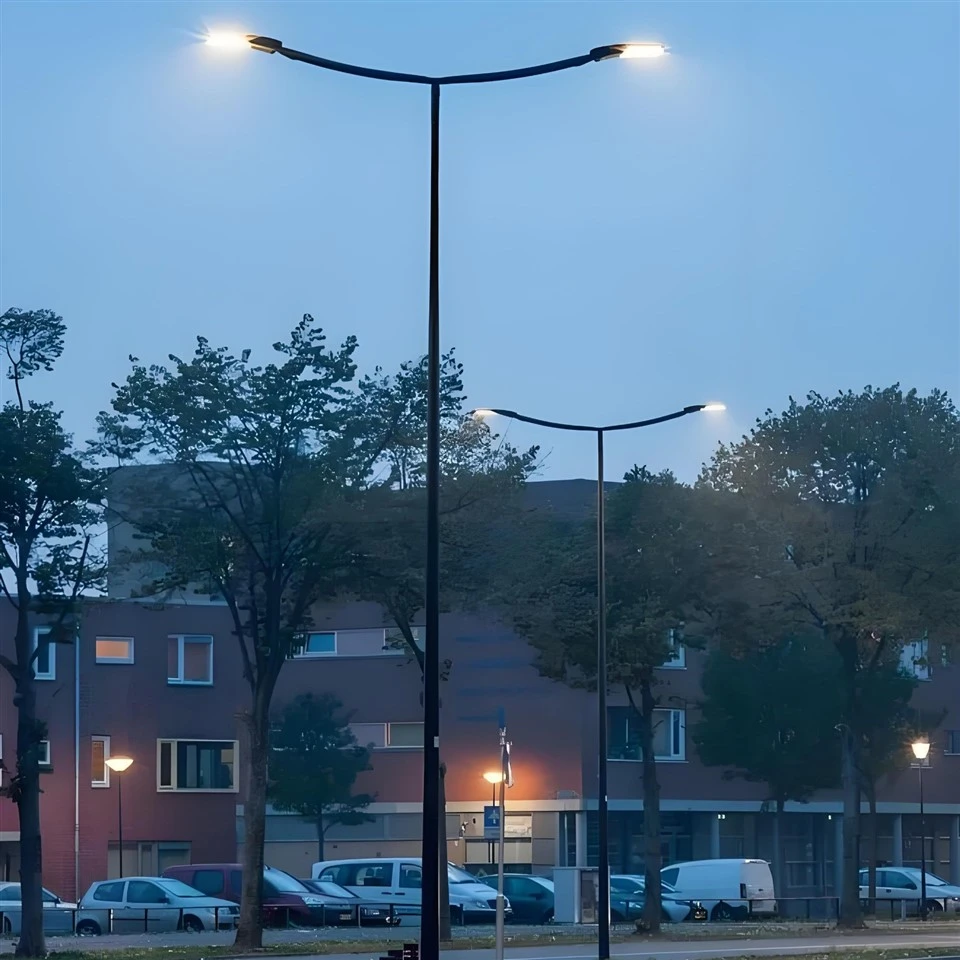
Our Double Arm Street Light and High Power Led Street Light models are also rigorously tested for UV emission. We conduct regular quality control checks to ensure that our products comply with international safety standards.
Conclusion and Call to Action
In conclusion, high - quality LED street lights generally do not emit significant amounts of UV rays. They are a safe and energy - efficient lighting solution for public areas. At our company, we are committed to providing the best - quality LED street lights that are not only bright and long - lasting but also safe for human health and the environment.
If you are in the market for LED street lights and have concerns about UV emission or any other aspect of our products, please feel free to contact us. We would be more than happy to discuss your requirements and provide you with detailed information about our products. Our team of experts is ready to assist you in choosing the right LED street lights for your project. Let's work together to create a safer and more energy - efficient lighting environment.
References
- International Electrotechnical Commission (IEC) standards on lighting product safety.
- Scientific studies on UV emission from LED lighting, available in peer - reviewed journals such as the Journal of Lighting Research and Technology.
- Technical reports on LED lighting technology published by industry associations.
