


Hey there! As a supplier of Led Road Lamps, I've been thinking a lot about how our products impact wildlife. It's a topic that's not only important for the environment but also for us as a business. We want to make sure that our Led Road Lamps are not causing harm to the animals and plants around us.
Let's start by understanding how light affects wildlife. Many animals, especially nocturnal ones, rely on the natural cycle of light and dark to regulate their behavior. For example, sea turtles use the moonlight reflecting off the ocean to guide them from the beach to the water after hatching. Artificial light from Led Road Lamps can disorient them, leading them in the wrong direction and often resulting in death.
Birds are also greatly affected by artificial light. During migration, they use the stars and the Earth's magnetic field to navigate. Bright lights from Led Road Lamps can confuse them, causing them to collide with buildings or other structures. This is a serious problem, as many bird species are already facing population declines due to habitat loss and other factors.
Insects are another group that is highly sensitive to light. They are attracted to artificial light sources, which can disrupt their natural behavior. For instance, moths are known to be drawn to lights at night. This can lead to a decrease in their population, as they may waste energy flying around the light instead of finding food or mates. And since insects are a crucial part of the food chain, a decline in their population can have a ripple effect on other animals.
Now, let's talk about how our Led Road Lamps can be designed to minimize these impacts. One of the key factors is the color temperature of the light. Warm - colored lights (lower color temperature) are less likely to attract insects and are also less disruptive to the natural behavior of animals. Our Led Road Lamp can be customized to have a warmer color temperature, which helps to reduce the negative effects on wildlife.
Another important aspect is the directionality of the light. By using well - designed fixtures, we can direct the light downwards, reducing light pollution and minimizing the impact on wildlife. Our Led Luminaire Street Light is designed with this in mind. It focuses the light exactly where it's needed, on the road, rather than spreading it out into the surrounding environment.
We also offer Led 100 Watt Street Light which is energy - efficient. This not only saves on electricity costs but also reduces the overall amount of light emitted into the environment. By using less energy, we can decrease the intensity of the light and thus reduce its impact on wildlife.
It's also important to consider the timing of the lights. We can install sensors on our Led Road Lamps so that they only turn on when there is actual traffic or activity. This way, the lights are not constantly on, reducing the exposure of wildlife to artificial light.
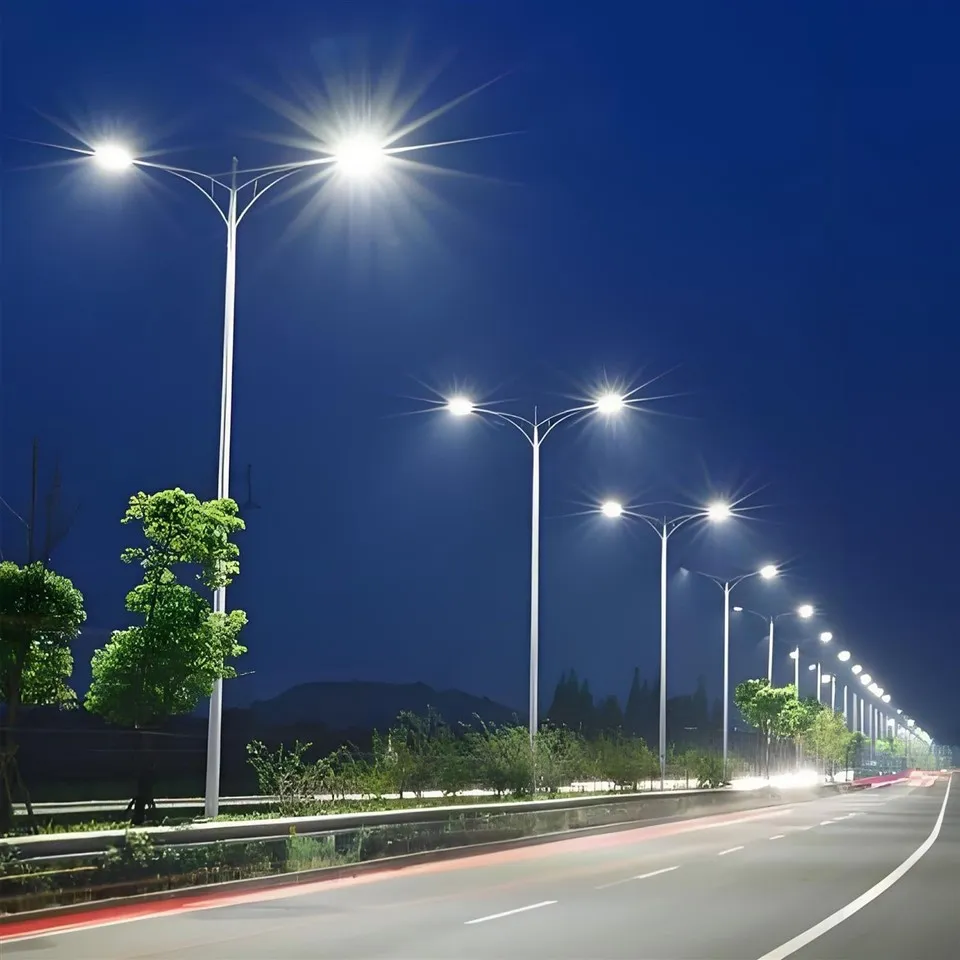

As a supplier, we take our responsibility towards the environment seriously. We're always looking for ways to improve our products and make them more wildlife - friendly. We understand that while providing safe and efficient lighting for roads is important, we also need to balance it with the well - being of the natural world.
If you're in the market for high - quality, wildlife - friendly Led Road Lamps, we'd love to have a chat with you. Whether you're a city planner, a contractor, or someone involved in a road project, we can offer you solutions that meet your needs while also being kind to the environment. Contact us to start a discussion about your requirements and how our products can fit into your project.
References:
- Gaston, K. J., Davies, T. W., Bennie, J., & Hopkins, J. (2013). Biological impacts of artificial light at night. Annual Review of Ecology, Evolution, and Systematics, 44, 219 - 241.
- Longcore, T., & Rich, C. (2004). Ecological light pollution. Frontiers in Ecology and the Environment, 2(4), 191 - 198.
- Navara, K. J., & Nelson, R. J. (2007). The dark side of light at night: physiological, epidemiological, and ecological consequences. Journal of Pineal Research, 43(3), 215 - 224.
