


As a supplier of Outdoor Led Street Lamps, I often get asked about the heat dissipation design of these essential lighting fixtures. In this blog post, I'll delve into the importance of heat dissipation in outdoor LED street lamps, the various design strategies employed, and how these designs contribute to the overall performance and longevity of the lamps.
The Importance of Heat Dissipation in Outdoor LED Street Lamps
LEDs, or light-emitting diodes, are known for their energy efficiency and long lifespan. However, like all electronic devices, they generate heat during operation. Excessive heat can have a detrimental effect on the performance and lifespan of LED street lamps. High temperatures can cause the LEDs to degrade more quickly, leading to a reduction in light output (also known as lumen depreciation) and a shorter overall lifespan. Additionally, heat can affect the color quality of the light, causing it to shift over time.
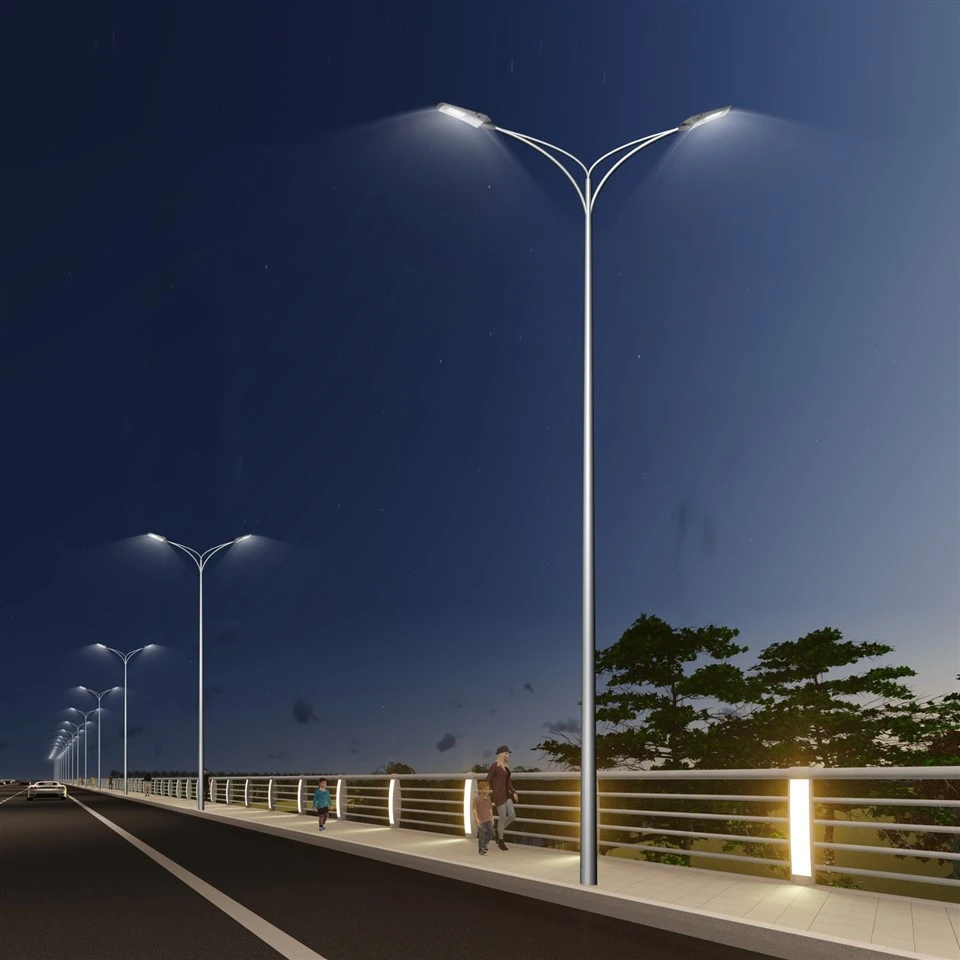

In outdoor environments, the challenges of heat management are even more pronounced. Street lamps are exposed to a wide range of temperatures, from extreme cold in winter to scorching heat in summer. They also need to withstand environmental factors such as humidity, dust, and rain, which can further impact heat dissipation. Therefore, a well-designed heat dissipation system is crucial for ensuring the reliable and efficient operation of outdoor LED street lamps.
Heat Dissipation Design Strategies
There are several design strategies that can be employed to effectively dissipate heat from outdoor LED street lamps. These strategies can be broadly categorized into passive and active heat dissipation methods.
Passive Heat Dissipation
Passive heat dissipation methods rely on natural convection and radiation to transfer heat away from the LEDs. These methods are simple, reliable, and require no additional power consumption. Some common passive heat dissipation techniques used in outdoor LED street lamps include:
-
Heat Sinks: Heat sinks are one of the most widely used passive heat dissipation components in LED lighting. They are typically made of materials with high thermal conductivity, such as aluminum or copper. Heat sinks work by increasing the surface area available for heat transfer, allowing heat to be dissipated more efficiently into the surrounding air. The design of the heat sink, including its shape, size, and fin configuration, can have a significant impact on its heat dissipation performance. For example, a heat sink with a larger surface area and more fins will generally be more effective at dissipating heat than one with a smaller surface area and fewer fins.
-
Thermal Interface Materials (TIMs): TIMs are used to improve the thermal contact between the LEDs and the heat sink. They fill in any microscopic gaps or irregularities between the two surfaces, reducing the thermal resistance and allowing heat to be transferred more efficiently. Common TIMs used in LED lighting include thermal grease, thermal pads, and phase change materials. The choice of TIM depends on factors such as the application requirements, the operating temperature range, and the cost.
-
Enclosure Design: The design of the lamp enclosure can also play an important role in heat dissipation. A well-designed enclosure should allow for adequate air circulation around the LEDs and the heat sink. This can be achieved through the use of ventilation holes, channels, or other features that promote natural convection. Additionally, the enclosure should be made of materials with good thermal properties to help dissipate heat.
Active Heat Dissipation
Active heat dissipation methods involve the use of external power to actively transfer heat away from the LEDs. These methods are typically more effective at dissipating heat than passive methods, but they also require additional power consumption and may be more complex and expensive to implement. Some common active heat dissipation techniques used in outdoor LED street lamps include:
-
Fans: Fans are a common active heat dissipation component used in high-power LED lighting applications. They work by forcing air to flow over the heat sink, increasing the convective heat transfer coefficient and improving the heat dissipation performance. Fans can be either axial or centrifugal, depending on the application requirements. Axial fans are typically used for applications where a large volume of air needs to be moved, while centrifugal fans are better suited for applications where a high pressure is required.
-
Liquid Cooling: Liquid cooling is a more advanced active heat dissipation method that involves the use of a liquid coolant to transfer heat away from the LEDs. The coolant is circulated through a closed-loop system, absorbing heat from the LEDs and transferring it to a radiator or other heat exchanger, where it is dissipated into the surrounding air. Liquid cooling systems can be very effective at dissipating heat, but they are also more complex and expensive to implement than other heat dissipation methods.
The Role of Heat Dissipation in Product Performance and Longevity
A well-designed heat dissipation system can have a significant impact on the performance and longevity of outdoor LED street lamps. By effectively dissipating heat, the system can help to maintain the LEDs at a lower operating temperature, which can improve their efficiency, reduce lumen depreciation, and extend their lifespan.
In addition to improving the performance and longevity of the LEDs, a good heat dissipation design can also enhance the overall reliability of the lamp. By reducing the temperature stress on the electronic components, the system can help to prevent premature failures and reduce the need for maintenance and replacement.
Conclusion
In conclusion, the heat dissipation design of outdoor LED street lamps is a critical factor in ensuring their reliable and efficient operation. By employing a combination of passive and active heat dissipation methods, manufacturers can effectively dissipate heat from the LEDs, improving their performance, longevity, and overall reliability. As a supplier of Outdoor Led Street Lamps, we are committed to using the latest heat dissipation technologies and design techniques to provide our customers with high-quality, energy-efficient, and long-lasting lighting solutions.
If you are interested in learning more about our Outdoor Led Street Lamps or would like to discuss your specific lighting requirements, please feel free to contact us. We would be happy to assist you with your purchase and provide you with the information and support you need.
References
- "LED Lighting Technology: Principles and Applications" by John W. Mullin
- "Thermal Management of Electronic Systems" by Avram Bar-Cohen and Ali Borca-Tasciuc
- "Handbook of LED Lighting" by Yoshi Ohno
