


Hey there! As a supplier of Hoop Solar Street Lights, I often get asked about the installation distance between multiple lights. It's a crucial question because getting it right can make a huge difference in terms of lighting efficiency, cost - effectiveness, and overall safety. So, let's dive right into it.
Factors Affecting the Installation Distance
First off, we need to understand the factors that play a role in determining the installation distance.
Light Intensity
The light intensity of a Hoop Solar Street Light is measured in lumens. A higher lumen output means the light can cover a larger area. For example, our 100 Watt Solar Led Street Light has a relatively high lumen output, which allows it to illuminate a wider radius compared to lower - wattage lights. If you're using lights with high lumen output, you can space them farther apart. On the other hand, if the light intensity is low, you'll need to install them closer together to ensure proper illumination.
Lighting Purpose
The purpose of the lighting also matters. If you're lighting up a busy urban street, you'll need more consistent and brighter lighting. In this case, the installation distance should be shorter to eliminate dark spots and provide a well - lit environment for pedestrians and vehicles. However, if you're lighting a rural area like a Countryside Solar Street Light application, where there's less traffic and a lower need for extremely bright lighting, you can increase the distance between the lights.
Mounting Height
The height at which the Hoop Solar Street Lights are mounted is another important factor. Generally, the higher the mounting height, the larger the area the light can cover. When the lights are mounted higher, you can increase the installation distance. For instance, if you mount the lights at a height of 6 meters, they'll cover a wider area compared to when they're mounted at 3 meters. So, you can space them farther apart at the higher mounting height.
Calculating the Installation Distance
Now, let's talk about how to calculate the installation distance. There isn't a one - size - fits - all formula, but here's a general approach.
Step 1: Determine the Illumination Requirement
The illumination requirement is usually specified in lux, which is a measure of the amount of light that falls on a surface. Different areas have different illumination requirements. For example, a parking lot may require 10 - 20 lux, while a main street may need 30 - 50 lux. You can refer to local lighting standards or industry guidelines to determine the appropriate illumination requirement for your project.
Step 2: Consider the Light Distribution
Hoop Solar Street Lights have different light distribution patterns, such as symmetric, asymmetric, or elliptical. The light distribution pattern affects how the light spreads on the ground. For a symmetric light distribution, the light spreads evenly in all directions. Asymmetric distribution is often used for street lighting, where more light is directed towards the road. You need to understand the light distribution pattern of your lights to calculate the installation distance accurately.
Step 3: Use a Lighting Design Software
One of the best ways to calculate the installation distance is to use lighting design software. These software tools take into account factors like light intensity, light distribution, mounting height, and illumination requirements. They can generate a detailed lighting plan that shows the optimal installation distance between the lights. If you're not familiar with using such software, you can consult with a lighting engineer or our technical support team, and we'll be happy to help you out.
Recommended Installation Distances
Based on our experience and industry standards, here are some recommended installation distances for different scenarios.
Urban Streets
For urban streets with high traffic volume, where safety and visibility are of utmost importance, the installation distance between Hoop Solar Street Lights is typically between 15 - 25 meters. This ensures that there are no dark spots and provides a well - lit environment for pedestrians and vehicles.

Rural Roads
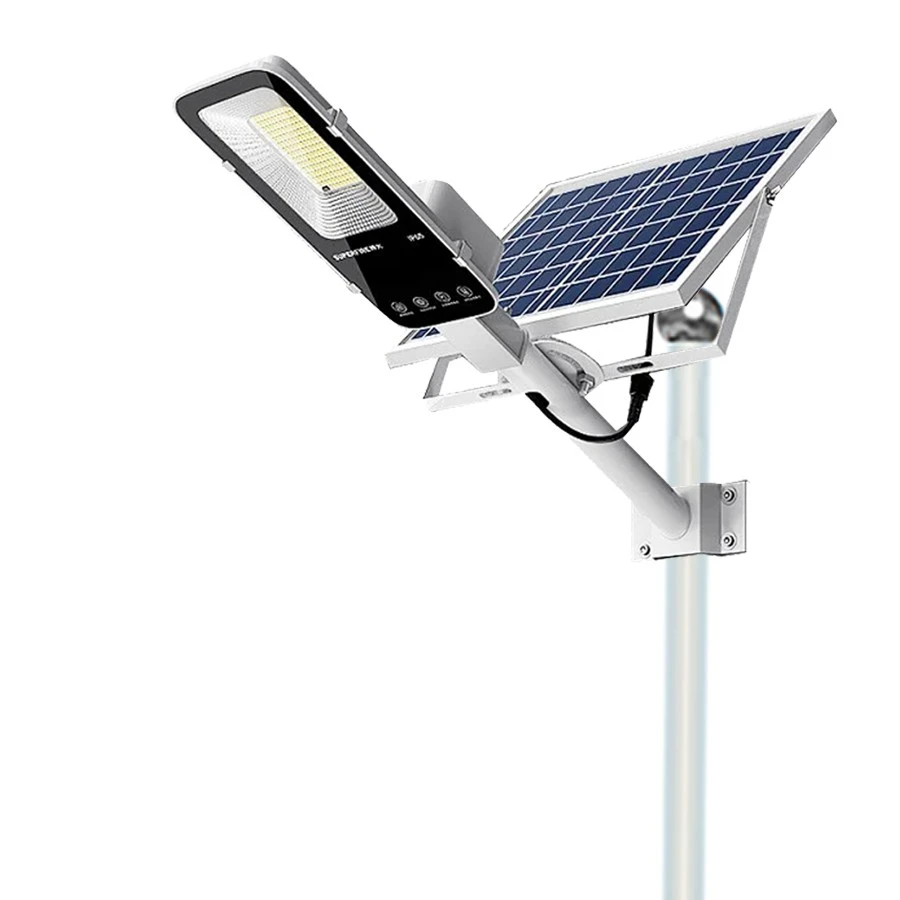
On rural roads, where there's less traffic, the installation distance can be increased to 25 - 35 meters. The Solar Powered Outdoor Street Lights can still provide sufficient lighting for basic visibility, and this spacing helps to reduce the overall cost of the lighting project.
Parking Lots
In parking lots, the installation distance depends on the size of the parking spaces and the illumination requirement. Generally, for a standard parking lot, the lights can be installed at a distance of 10 - 20 meters. This provides enough light for drivers to park their cars safely and for pedestrians to move around the parking lot.
Importance of Correct Installation Distance
Getting the installation distance right is not just about aesthetics; it has several practical benefits.
Energy Efficiency
If the lights are installed too close together, you'll be using more energy than necessary. On the other hand, if they're too far apart, there will be dark spots, and you may need to install additional lights later, which also wastes energy. By installing the lights at the correct distance, you can optimize energy consumption and save on electricity costs in the long run.
Cost - Effectiveness
Correct installation distance helps to reduce the number of lights required for a project. This means lower upfront costs for purchasing the lights and lower installation costs. Additionally, as mentioned earlier, it also reduces energy costs, making the entire lighting project more cost - effective.
Safety and Visibility
Properly spaced lights ensure that there are no dark spots, which is crucial for safety. In areas with good lighting, pedestrians can see clearly where they're going, and drivers can spot potential hazards on the road. This reduces the risk of accidents and improves overall safety.
Conclusion
So, there you have it! The installation distance between multiple Hoop Solar Street Lights depends on several factors, including light intensity, lighting purpose, and mounting height. By considering these factors and following the recommended distances for different scenarios, you can ensure an efficient, cost - effective, and safe lighting solution.
If you're planning a lighting project and need more information about our Hoop Solar Street Lights or help with calculating the installation distance, don't hesitate to reach out. We're here to assist you every step of the way. Whether you're lighting an urban street, a rural road, or a parking lot, we have the right products and expertise to meet your needs. Let's work together to create a well - lit environment!
References
- Lighting Handbook: Recommended Practice for Road Lighting, Illuminating Engineering Society (IES)
- Solar Lighting Systems Design and Installation Guide, International Renewable Energy Agency (IRENA)
