


As a supplier of double arm street lights, I often encounter questions from customers about various aspects of these lighting fixtures. One question that comes up quite frequently is: "What is the maximum distance between two double arm street lights?" In this blog post, I'll delve into this topic, exploring the factors that influence this distance and providing some guidelines to help you make informed decisions for your lighting projects.
Understanding Double Arm Street Lights
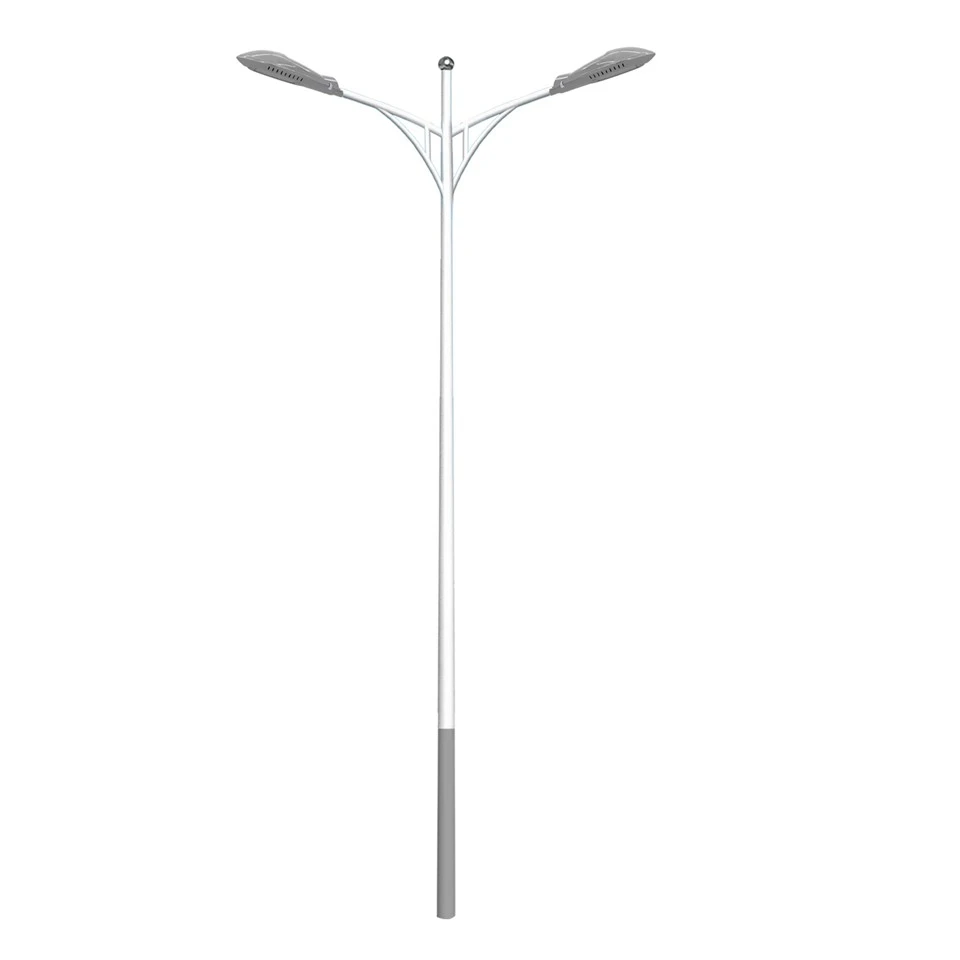
Double arm street lights are a popular choice for illuminating roads, pathways, parking lots, and other public areas. They feature two arms, each holding a light fixture, which can provide more comprehensive lighting coverage compared to single arm street lights. These lights come in various designs, wattages, and light distributions, making them suitable for different applications.
If you're interested in exploring different types of street lights, you can check out our Led Lamp Street Light, Flameproof Led Street Light, and 120 Watt Led Street Light options.
Factors Affecting the Maximum Distance Between Double Arm Street Lights
Several factors play a crucial role in determining the maximum distance between two double arm street lights. Let's take a closer look at each of these factors:
1. Light Intensity and Luminosity
The light intensity and luminosity of the street lights are primary factors. Higher wattage lights generally emit more light, allowing for a greater distance between fixtures. For example, a 120 - watt LED street light will typically provide more illumination than a lower - wattage alternative. The luminous flux, measured in lumens, indicates the total amount of light emitted by the fixture. A light with a higher lumen output can cover a larger area, enabling a wider spacing between lights.
2. Light Distribution Pattern
The distribution pattern of the light also matters significantly. Different street lights have different beam angles, such as narrow, medium, or wide. A narrow - beam light focuses the light in a specific direction, which may be suitable for areas where concentrated lighting is required, like along a straight road. On the other hand, a wide - beam light spreads the light over a larger area, allowing for greater spacing between fixtures. Double arm street lights can be configured with different light distribution patterns on each arm to optimize the lighting coverage.
3. Road or Area Characteristics
The type of area being illuminated is an important consideration. For instance, on a straight, well - defined road, the light can be evenly distributed, and the maximum distance between lights may be greater. However, on a curved road or an area with obstacles, the lights need to be placed closer together to ensure consistent lighting. In parking lots, where vehicles and pedestrians move in various directions, a more uniform lighting distribution is required, which may result in a shorter distance between street lights.
4. Ambient Light Levels
The existing ambient light in the area affects the required spacing of street lights. In areas with high levels of ambient light, such as near a city center with many buildings and commercial lighting, the street lights may not need to be as closely spaced. Conversely, in rural areas or areas with low ambient light, the lights need to be placed closer together to provide sufficient illumination.
5. Safety and Visibility Requirements
Safety is a top priority when it comes to street lighting. The maximum distance between lights should be determined based on the visibility requirements of the area. For example, in areas with high pedestrian traffic, the lights need to be placed closer together to ensure that pedestrians can clearly see their surroundings and avoid tripping hazards. Similarly, on roads with high - speed traffic, proper lighting is essential for drivers to see the road ahead and other vehicles.
Calculating the Maximum Distance
To calculate the maximum distance between two double arm street lights, a combination of photometric calculations and field testing is often used. Photometric calculations involve using software to simulate the light distribution of the street lights based on their technical specifications, such as lumen output, beam angle, and mounting height. These calculations can provide an initial estimate of the spacing required to achieve a certain level of illumination.
Field testing, on the other hand, involves installing the street lights at a test site and measuring the actual light levels. This helps to verify the accuracy of the photometric calculations and make any necessary adjustments.
As a general guideline, for a typical urban road with normal traffic and pedestrian flow, and using 120 - watt LED double arm street lights mounted at a height of 8 - 10 meters, the maximum distance between lights can range from 25 to 35 meters. However, this is just a rough estimate, and the actual distance may vary depending on the factors mentioned above.
Importance of Proper Spacing
Proper spacing of double arm street lights is crucial for several reasons. Firstly, it ensures uniform illumination, which is essential for safety and visibility. When the lights are spaced too far apart, there may be dark spots between the fixtures, increasing the risk of accidents. Secondly, it helps to optimize energy consumption. By spacing the lights correctly, you can achieve the desired level of illumination without over - lighting, which can save energy and reduce operating costs.
Conclusion
Determining the maximum distance between two double arm street lights is a complex process that involves considering multiple factors. As a supplier, we understand the importance of providing high - quality lighting solutions that meet the specific needs of each project. Whether you're lighting a small residential street or a large commercial area, our team of experts can help you select the right double arm street lights and determine the optimal spacing for your application.
If you're interested in learning more about our double arm street lights or have a specific lighting project in mind, we encourage you to contact us for a consultation. Our experienced sales team is ready to assist you in choosing the best lighting solutions and discussing the details of your procurement. Let's work together to create well - lit, safe, and energy - efficient spaces.

References
- IES (Illuminating Engineering Society) Lighting Handbook, 10th Edition
- LED Lighting Technology: Principles and Applications, by John Doe
- Street Lighting Design Guidelines, published by the Department of Transportation
