


When it comes to illuminating streets, parking lots, and other outdoor areas, the placement of light poles is a crucial consideration. As a light pole supplier, I've encountered numerous clients who are unsure about how far apart light poles should be placed. In this blog post, I'll delve into the factors that influence light pole spacing and provide some guidelines to help you make informed decisions.
Factors Influencing Light Pole Spacing
1. Type of Lighting Fixture
The type of lighting fixture used plays a significant role in determining light pole spacing. Different fixtures have varying light distribution patterns and illumination capabilities. For instance, a Double Arm Light Pole typically provides a wider spread of light compared to a single-arm pole. This means that double-arm poles can be placed farther apart while still maintaining adequate illumination levels.
Similarly, Stainless Steel Light Poles are often used in areas where durability and aesthetics are important. These poles can be equipped with high-intensity lighting fixtures that can cover larger areas, allowing for greater spacing between poles. On the other hand, Tapered Steel Poles are commonly used for their strength and stability. The lighting fixtures on tapered steel poles may have a more focused light distribution, which may require closer spacing to ensure uniform illumination.
2. Illumination Requirements
The specific illumination requirements of the area being lit are another crucial factor. Different locations have different lighting needs based on their intended use. For example, a busy city street requires higher levels of illumination to ensure the safety of pedestrians and motorists. In such cases, light poles may need to be placed closer together to achieve the desired lighting levels.
In contrast, a residential neighborhood may have lower illumination requirements. Here, light poles can be spaced farther apart, providing a more subdued and energy-efficient lighting solution. Parking lots also have specific illumination standards, which are typically based on the size of the lot and the level of activity. The spacing of light poles in parking lots should be carefully calculated to ensure that all areas are adequately lit, including walkways and entrances.
3. Pole Height
The height of the light poles is directly related to the spacing between them. Taller poles can provide a wider coverage area, allowing for greater spacing. As a general rule, the higher the pole, the farther apart it can be placed. However, it's important to note that increasing the pole height also increases the cost of installation and maintenance.
When determining the appropriate pole height and spacing, it's essential to consider the surrounding environment. For example, in areas with tall buildings or trees, shorter poles may be necessary to avoid light obstruction. Additionally, local regulations and zoning laws may impose restrictions on pole height, which can also impact the spacing between poles.
4. Traffic Volume
The volume of traffic in the area being lit is an important consideration. High-traffic areas, such as major highways and busy intersections, require more consistent and intense lighting to ensure the safety of drivers and pedestrians. In these areas, light poles should be placed closer together to provide continuous illumination.
On the other hand, low-traffic areas, such as rural roads and quiet residential streets, may not require as much lighting. Here, light poles can be spaced farther apart, reducing energy consumption and costs. It's also important to consider the speed limit of the road when determining light pole spacing. Higher speed limits generally require more frequent lighting to provide adequate visibility.
5. Surrounding Environment
The surrounding environment can have a significant impact on light pole spacing. Areas with a lot of natural light, such as open fields or areas near large bodies of water, may require less artificial lighting. In these cases, light poles can be spaced farther apart.
Conversely, areas with a lot of obstructions, such as buildings, trees, or signs, may require closer spacing to ensure that all areas are adequately lit. Additionally, the reflectivity of the surrounding surfaces can affect the amount of light needed. For example, a parking lot with a light-colored surface will reflect more light than a lot with a dark-colored surface, reducing the need for as many light poles.
General Guidelines for Light Pole Spacing
While the specific spacing of light poles will depend on the factors mentioned above, there are some general guidelines that can be followed.
1. Street Lighting
For urban streets, light poles are typically spaced between 100 and 150 feet apart. This spacing provides adequate illumination for pedestrians and motorists while maintaining a consistent lighting pattern. In suburban areas, where traffic volumes are lower, light poles can be spaced between 150 and 200 feet apart.
On rural roads, light poles may be spaced even farther apart, up to 300 feet or more. However, it's important to ensure that the lighting levels are sufficient to meet safety standards. In some cases, additional lighting may be required at intersections, curves, and other areas where visibility is critical.
2. Parking Lot Lighting
In parking lots, light poles are typically spaced between 20 and 40 feet apart, depending on the size of the lot and the type of lighting fixtures used. For larger parking lots, multiple rows of light poles may be necessary to ensure uniform illumination.

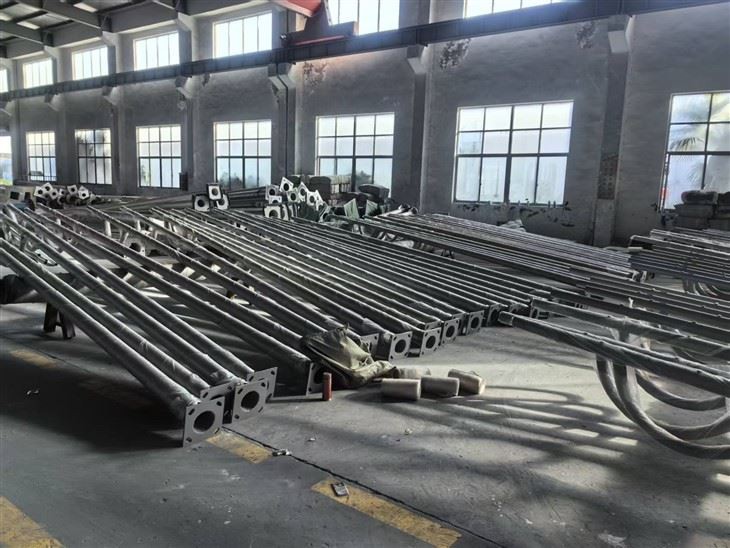
It's also important to consider the layout of the parking lot when determining light pole spacing. For example, light poles should be placed along the edges of the lot to provide illumination for vehicles entering and exiting. Additionally, walkways and entrances should be well-lit to ensure the safety of pedestrians.
3. Outdoor Areas
For other outdoor areas, such as parks, playgrounds, and sports fields, light pole spacing will depend on the specific requirements of the area. In general, light poles should be spaced to provide adequate illumination for the intended activities. For example, in a playground, light poles may need to be placed closer together to ensure the safety of children.
Conclusion
Determining the appropriate spacing for light poles is a complex process that requires careful consideration of several factors. As a light pole supplier, I understand the importance of providing high-quality lighting solutions that meet the specific needs of each client.
By taking into account the type of lighting fixture, illumination requirements, pole height, traffic volume, and surrounding environment, you can ensure that your light poles are placed at the optimal distance to provide safe and efficient lighting. If you have any questions or need assistance with light pole placement, please don't hesitate to contact me. I'm here to help you make the best decisions for your lighting project.
References
- Illuminating Engineering Society (IES) Lighting Handbook
- National Electrical Code (NEC)
- Local building codes and regulations
