


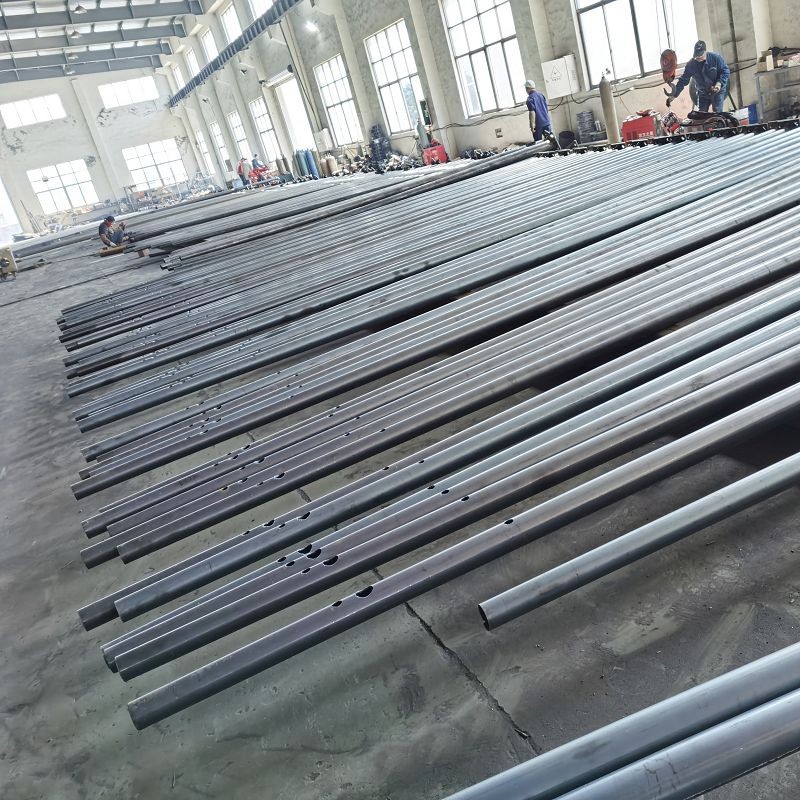
Hey there! As a supplier of Tapered Steel Poles, I often get asked about how long these poles can resist corrosion. It's a super important question, especially when you're investing in outdoor infrastructure like street lights or other installations that rely on these poles. So, let's dig into it and find out what affects the corrosion resistance of tapered steel poles and how long they can actually last.
First off, let's understand what corrosion is. In simple terms, corrosion is the process where metals, like steel, react with elements in their environment, usually oxygen and water, to form metal oxides. For steel, this often results in rust. Rust not only looks bad but can also weaken the structure of the pole over time, which is a big no - no when it comes to safety and durability.
There are a bunch of factors that can influence how long a tapered steel pole can resist corrosion. The environment where the pole is installed plays a huge role. If the pole is placed in a coastal area, it's going to face a much harsher environment compared to an inland location. Coastal areas have high humidity and salt in the air, which are like kryptonite for steel. Salt accelerates the corrosion process by increasing the conductivity of the water on the surface of the pole, making it easier for the electrochemical reactions that cause rust to occur.
On the other hand, if the pole is installed in a dry, clean environment, it's likely to last a lot longer. Low humidity means less water on the surface of the steel, which slows down the corrosion process. Industrial areas can also be tough on steel poles. Pollutants in the air, such as sulfur dioxide and nitrogen oxides, can react with water to form acids. These acids can eat away at the steel, causing it to corrode faster.
The type of coating on the tapered steel pole is another crucial factor. There are several types of coatings that can be applied to protect the steel from corrosion. One of the most common is galvanization. Galvanizing involves coating the steel with a layer of zinc. Zinc is more reactive than steel, so when it's exposed to the environment, it corrodes first, sacrificing itself to protect the underlying steel. A well - galvanized tapered steel pole can last anywhere from 20 to 50 years in a normal environment.
Another option is powder coating. Powder coating is a dry finishing process where a powder is electrostatically applied to the steel and then baked in an oven to form a hard, protective layer. Powder coatings come in a variety of colors and can provide good corrosion resistance. However, they are more prone to chipping and scratching compared to galvanization. If the powder coating is damaged, the underlying steel is exposed and can start to corrode. With proper installation and maintenance, a powder - coated tapered steel pole can last around 15 to 30 years.
There are also specialized coatings available, such as epoxy coatings. Epoxy coatings are known for their excellent chemical resistance and adhesion. They can provide a high level of protection against corrosion, especially in harsh environments. An epoxy - coated tapered steel pole can have a lifespan of 30 to 50 years or more, depending on the conditions.
The thickness of the steel itself also matters. A thicker - walled tapered steel pole will generally resist corrosion longer than a thinner one. Thicker steel provides more material to corrode before the structural integrity of the pole is compromised. However, it's important to note that just having thick steel isn't enough. The coating and the environment still play significant roles.
Now, let's talk about some real - world examples. I've seen tapered steel poles installed in urban areas with normal environmental conditions. These poles, which were galvanized, have been standing strong for over 30 years with only minor signs of corrosion. On the other hand, I've also seen poles in coastal areas that started to show rust within 5 years, even though they were galvanized. This just goes to show how much the environment can impact the lifespan of a tapered steel pole.
If you're in the market for a tapered steel pole, you might be interested in our Octagonal Street Light Pole. It's a popular choice for many municipalities and businesses. Our Tapered Steel Pole is designed to meet high - quality standards and comes with your choice of coating options. And if you need a specific height, our 8 Meter Street Light Pole could be the perfect fit.
To sum it up, the lifespan of a tapered steel pole in terms of corrosion resistance can vary widely. In a mild environment with a good coating, it can last several decades. But in a harsh environment, the lifespan can be significantly shorter. If you're thinking about purchasing tapered steel poles for your project, it's important to consider the environment where they will be installed and choose the right coating accordingly.
If you have any questions about our tapered steel poles or want to discuss your specific requirements, don't hesitate to reach out. We're here to help you make the best choice for your project and ensure that your investment lasts as long as possible.
References

- ASM Handbook Volume 13A: Corrosion: Fundamentals, Testing, and Protection. ASM International.
- NACE International Standards for Corrosion Control in the Steel Industry.
